
Housing
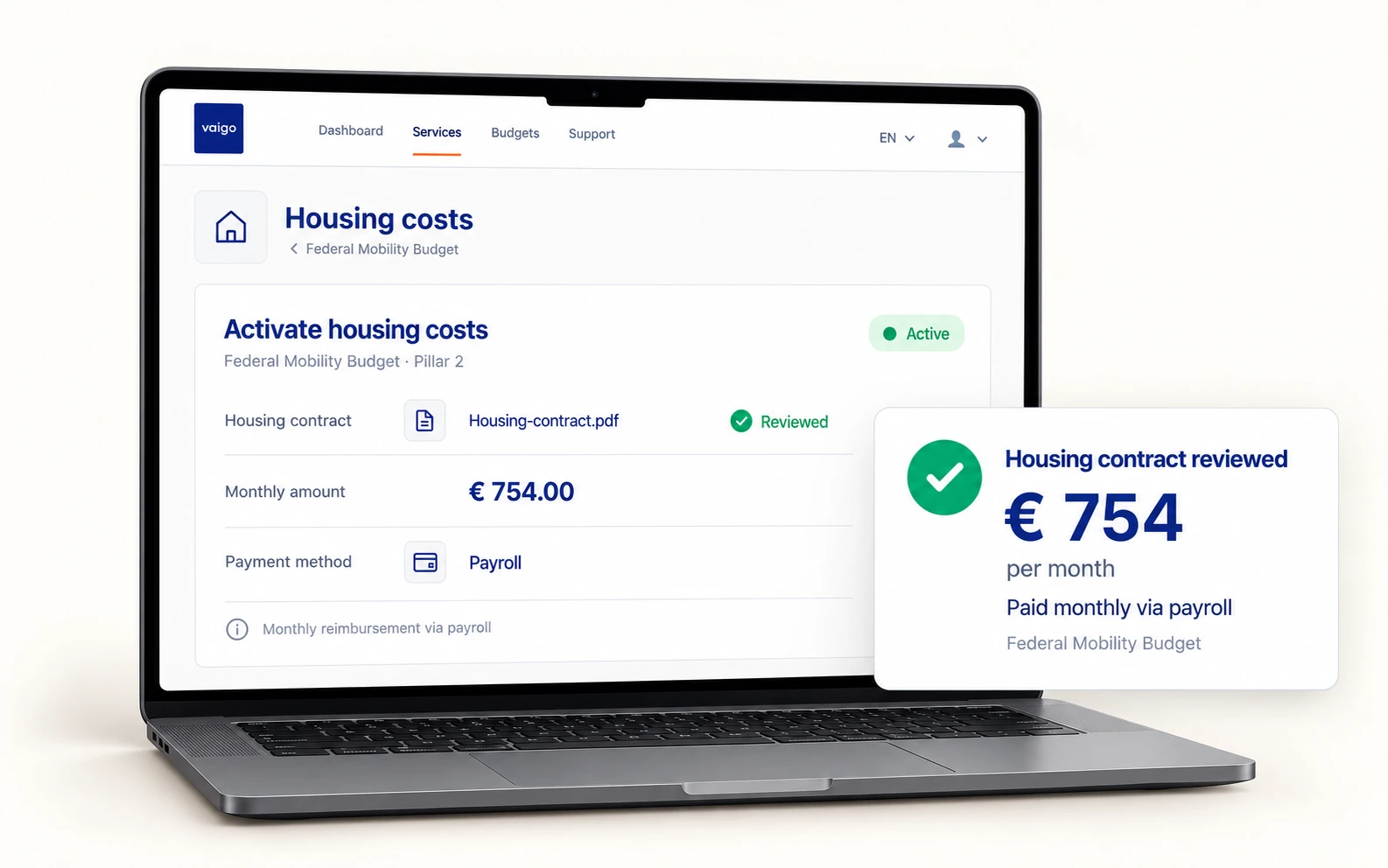
Qualifying rent or mortgage costs, with the required address and document checks.
The Federal Mobility Budget, with Vaigo
A car, a train, a bike. Even a home closer to work. Give eligible employees meaningful choices, while Vaigo handles the budgets, checks and daily questions behind them.

A benefit built around real life
The Federal Mobility Budget lets eligible employees exchange their company car, or entitlement to one, for a budget based on its total cost to the employer. They choose how to use it within your offer and the statutory rules.
The statutory Federal Mobility Budget is different from a company-defined flexible mobility budget.
First, set the budget
The budget starts with total cost of ownership, rather than the lease price alone. Use the statutory actual-cost or lump-sum method, agreed with your advisers.
Import your allocations. Vaigo handles the agreed pro-rata adjustments when employees join or leave.
Use employee, car-policy and commuting data in Vaigo’s calculation workflow.
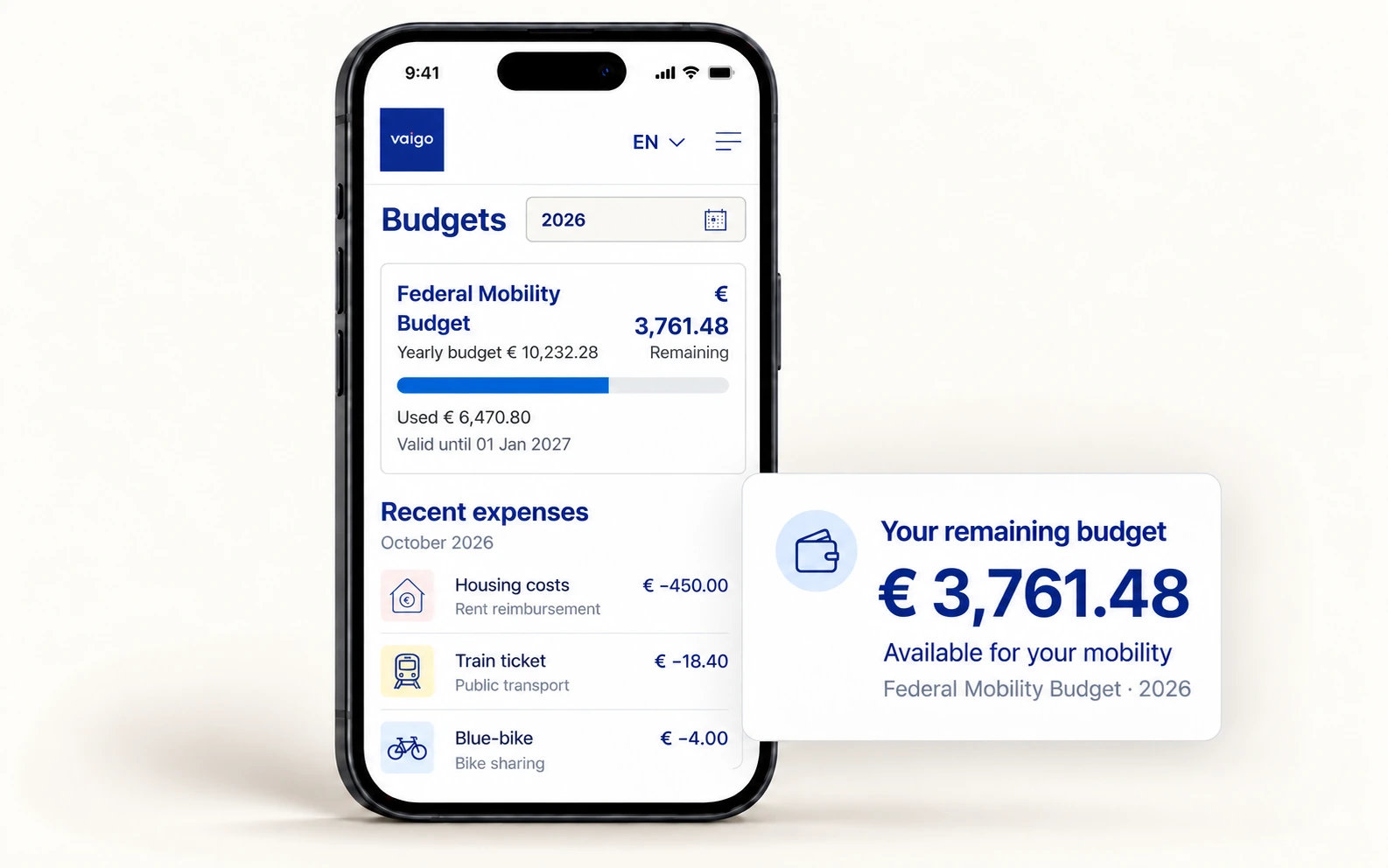

Pillar 1 / Company car
A qualifying company car can remain part of the budget. Its costs are deducted first, leaving the remaining amount for other choices.
Cars ordered or leased from 1 January 2026 must have zero CO₂ emissions to qualify under Pillar 1. Official conditions →
Pillar 2 / Sustainable mobility & housing
A bike on Monday. A train on Tuesday. Housing close to work. Employees choose from the eligible options your organisation offers; Vaigo takes care of the records behind those choices.
Eligible Pillar 2 spending is exempt from income tax and social security contributions. Conditions and your employer’s offer apply.
Qualifying rent or mortgage costs, with the required address and document checks.
Tickets and subscriptions for journeys that fit the employee’s day.
Eligible purchase, leasing, maintenance and accessories.
Eligible shared bikes, cars and other supported services.
Payment-card, ticketing and reimbursement routes depend on the service and your setup. Explore integrations →
Pillar 3 / Remaining balance
Track spending throughout the year and prepare the remaining balance for payroll. Employees can see where they stand; your team has the records behind the settlement.
The balance cannot roll over. Annual settlement is due no later than the following January payroll. Official settlement rules →
A digital colleague. Real support.
Employees get one place to view options, upload documents and follow claims. They can also ask about your mobility policy, benefits and providers.
“Can I use my budget for this train subscription?”
“Which documents do I need for my housing claim?”
AI agents answer questions and prepare work. Mobility specialists review cases needing judgement and escalate decisions to the right person.
Meet the platform and the people →
HR and Fleet set the policy, improve the offer and work with suppliers. Vaigo handles recurring work within the agreed scope, with visibility for your team.
Free FMB tools
On mobiliteitsbudget.info you can calculate, draft and check your federal mobility budget yourself. Free, in Dutch and French.
Practical questions
Statutory details checked on 14 October 2026. Your offer must also reflect your organisation’s policy and individual eligibility.
It is linked to company-car entitlement, rather than being a general benefit for every employee. Employer and employee conditions apply. Confirm eligibility before onboarding someone into the scheme.
For 2026, the annual minimum is €3,233 and the absolute maximum is €17,244. A separate ceiling of one fifth of the employee’s total gross salary also applies. Pro-rata and other statutory rules can affect the individual amount.
Qualifying rent, mortgage interest and capital repayments can fall under Pillar 2 where the home is within 10 km of the normal workplace. Telework can affect which location counts as the normal workplace; this needs a case-specific check.
Plan the first release around a clear, manageable offer. Identify the employee needs, documents, payment routes and provider connections it requires. Agree what is ready for launch and what you want to add later.
Vaigo supports questions about the mobility benefits your organisation offers, its policy and the relevant providers. Support covers more than using the application. AI agents prepare work and answer questions; mobility specialists handle cases requiring judgement and escalate decisions to the right person.
Bring your current payroll process and provider arrangements to the setup discussion. We agree the records, connection or file format, review steps and timing before implementation.
Bring your current policy or your first rollout plans. We’ll walk through the employee experience, administration and connections with you.